Week 8
Analytical Modeling Overview
- Instructors
- Maclean Gaulin
What to do with our data?
- Once we have data, what then?
- Use it!
- Model the world
- Descriptive: What happened?
- Diagnostic: Why did it happen?
- Predictive: What will happen?
- Prescriptive: What should we make happen?
What is a model?
- A model is a description of how the world works
- E.g. market equity is discounted cash flows
- Could be flow-charts to formalize decision-making
- Example: Lease accounting determination
- Could be mathematical models
- Example: Y = m*X + b
Modeling has Pros and Cons
- Data analytics has profound benefits in Accounting
- Business insight, cost and revenue forecasting, efficient audit and internal controls, fraud detection, …
- But models are imperfect
- Built on assumptions
- Limited by data
- Cautious optimism and professional skepticism
General Model Intents
- Descriptive: What happened?
- Diagnostic: Why did it happen?
- Predictive: What will happen?
- Prescriptive: What should we make happen?
- Significant overlap (not a clean classification)
- Because it’s all just modeling
Model Intent Timeline
- Identify a situation and what occurred (descriptive)
- Determine why it occurred the way it did (diagnostic)
- Leverage that knowledge to predict outcomes outside the specific situation (predictive)
- Consider different outcomes and choose one for some (good) reason (prescriptive)
Descriptive Models
- Intent is to describe, or capture something
- Lots of learning about the data and setting
- Your accounting domain knowledge is critical here!
- Typically where we do exploratory data analysis
- Often utilizing summary statistics, simple regressions
- Example: Assets & Liabilities have R2 of 99%
- Note! Running a regression at this stage doesn’t imply causality. It just shows us average relationships.
Diagnostic Models
- Intent is to take the next step and learn why what you observed happened
- The validity of the results relies entirely on the model
- This is where most economists live
- They are notoriously averse to predicting the future!
- Often done with regressions/classifications
- Outlier analysis for audit / forensic accounting
- Causal models to identify true relationships
Predictive Models
- Intent is to use your knowledge to model new outcomes (i.e. predicting the future)
- Also used to understand what would have happened if different decisions had been made
- Very dependent on model and assumptions
- Was data used “normal” or representative?
- Will assumptions change going forward (e.g. interest)?
- Often conflated with diagnostic models
Prescriptive Models
- Intent is to decide what actions to take
- Flow-charts to guide decisions
- Models with turnable dials to perform what-if analyses
- Can result in a firm conclusion, or a data-backed input for decision-makers
- Should factor in harder-to-model inputs, like risk
- Careful about relying on predictive models of causality (the point of choosing is to change things!)
Modeling Caveats
- Most modeling boils down to using historical data to make inferences about the future
- Correlational approaches (most machine learning) often cannot predict what it has not “seen”
- Modeling the structure (most economics) often will not pick up real world complexity, and parameters are determined by correlational approaches
- It all depends on the assumptions (data and model)
From theory to practice
- An analytical model is usually defined as a relationship with unknown quantities
- E.g. Y = m*x + b
- Fitting is estimating the unknown quantities
- E.g. the m and b
- Example: Altman’s Z Score – bankruptcy prediction
- Z = 1.2 WCap + 1.4 RE + 3.3 EBIT + 1 Rev + 0.6 MVE
- Z < 1.1 “Bankrupt zone”, Z < 2.6 “Grey Zone”
What is a good fit?
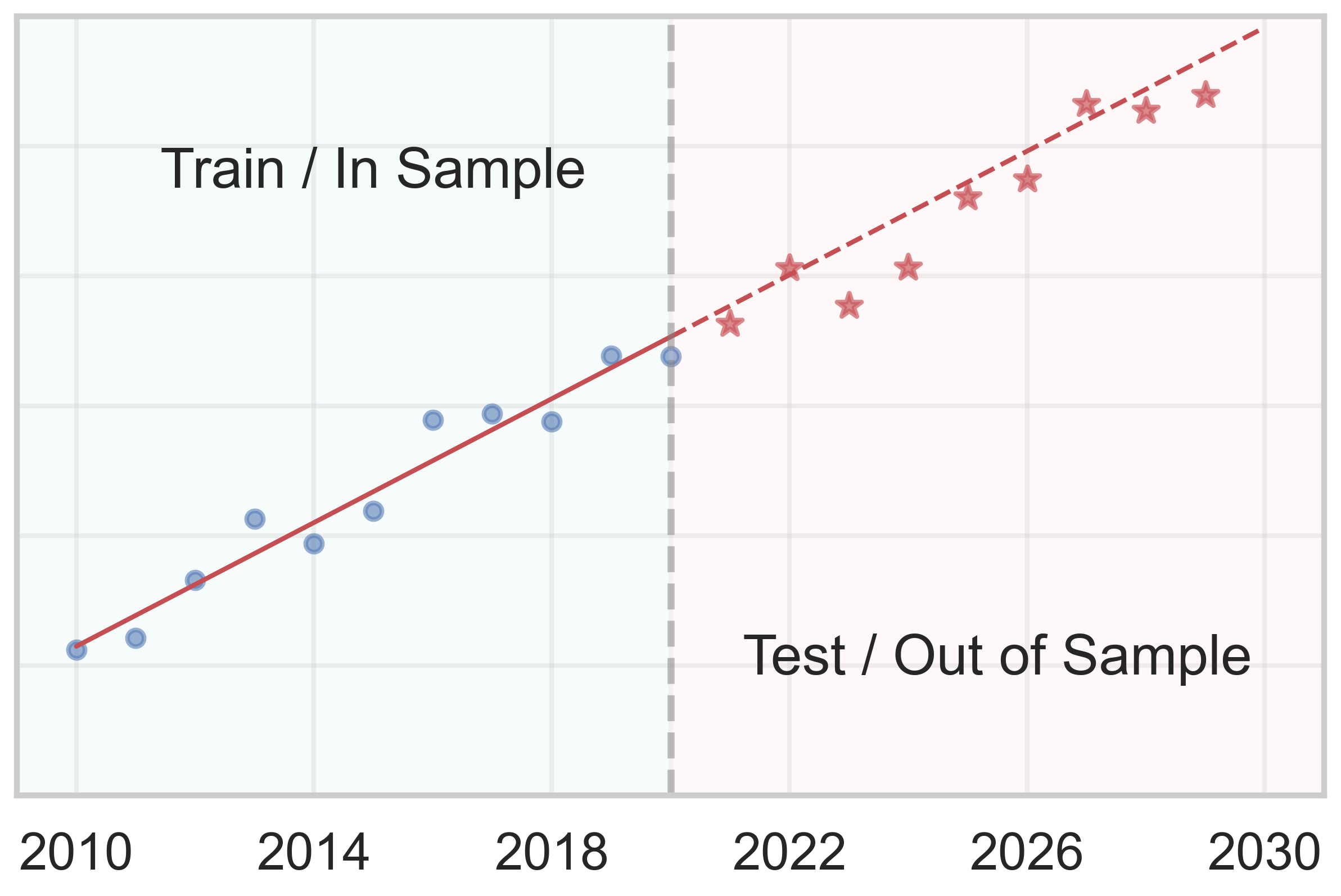
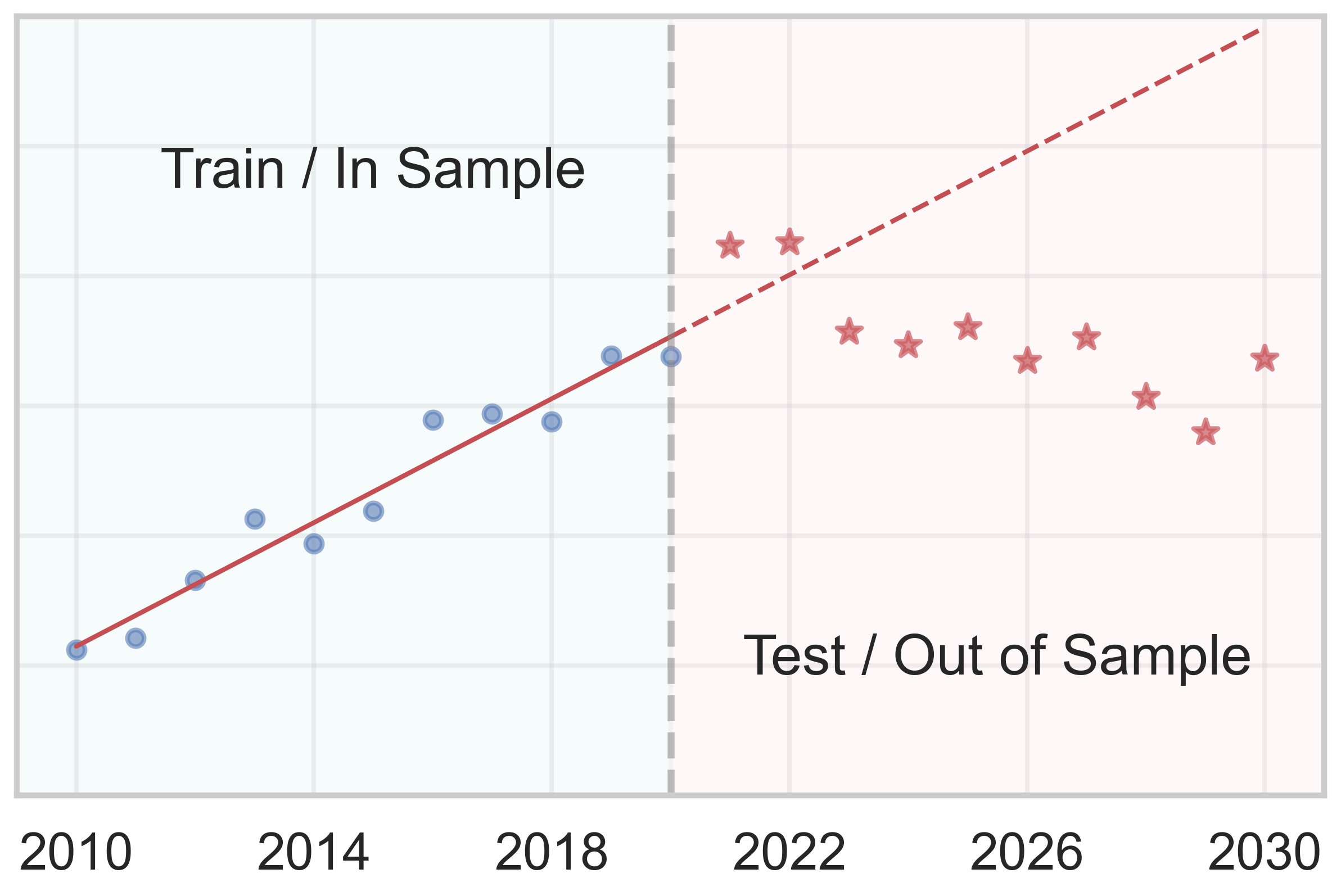
- How well does the model describe the data you have
- Called in sample fit, based on training data
- How well does the model predict new data
- Called out of sample fit, based on test data
What is a good fit?
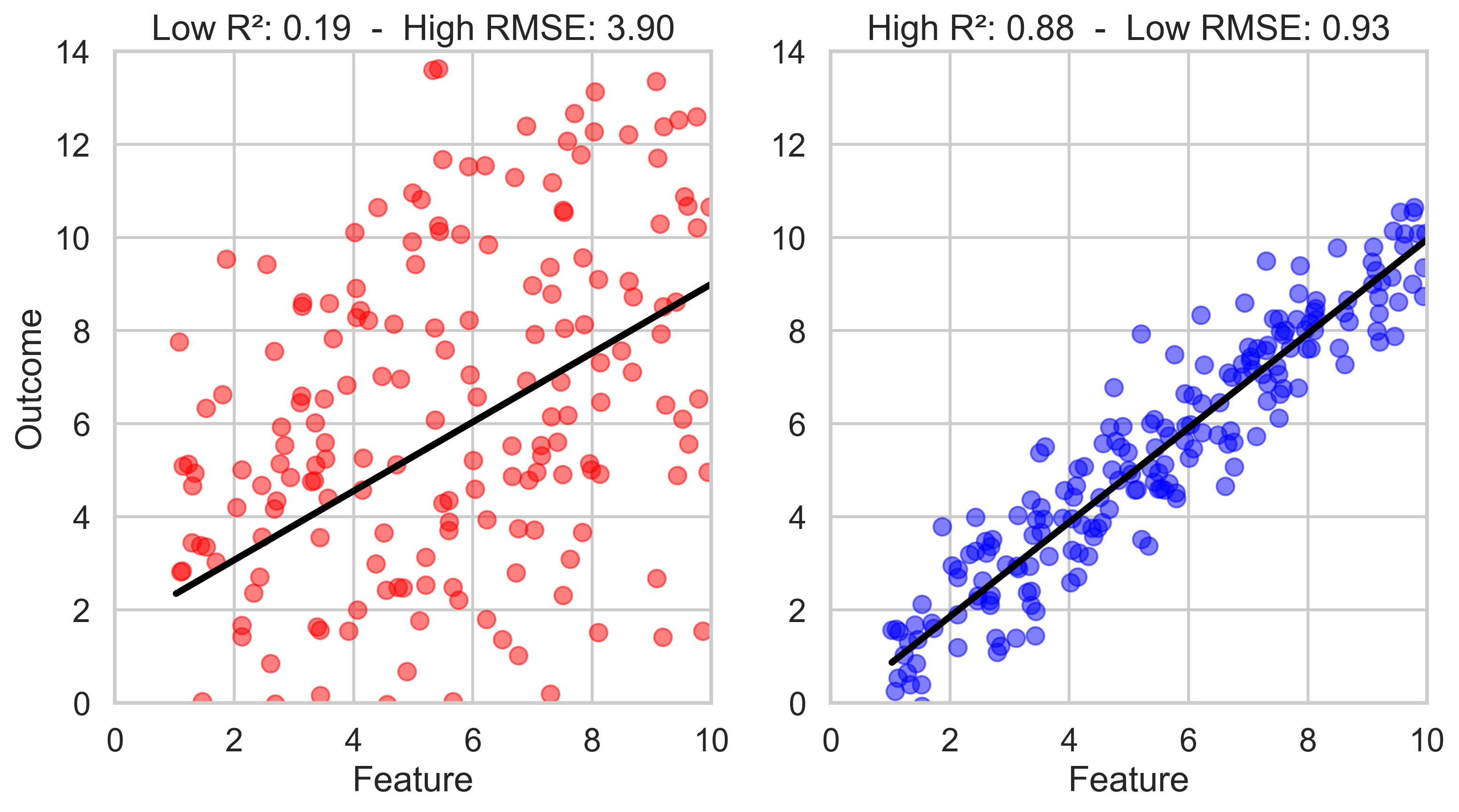
- With regressions, we often measure how “wrong” the predictions are
- R2: how much of the outcome variable’s value the model explains
- RMSE/MAE: measures of average error
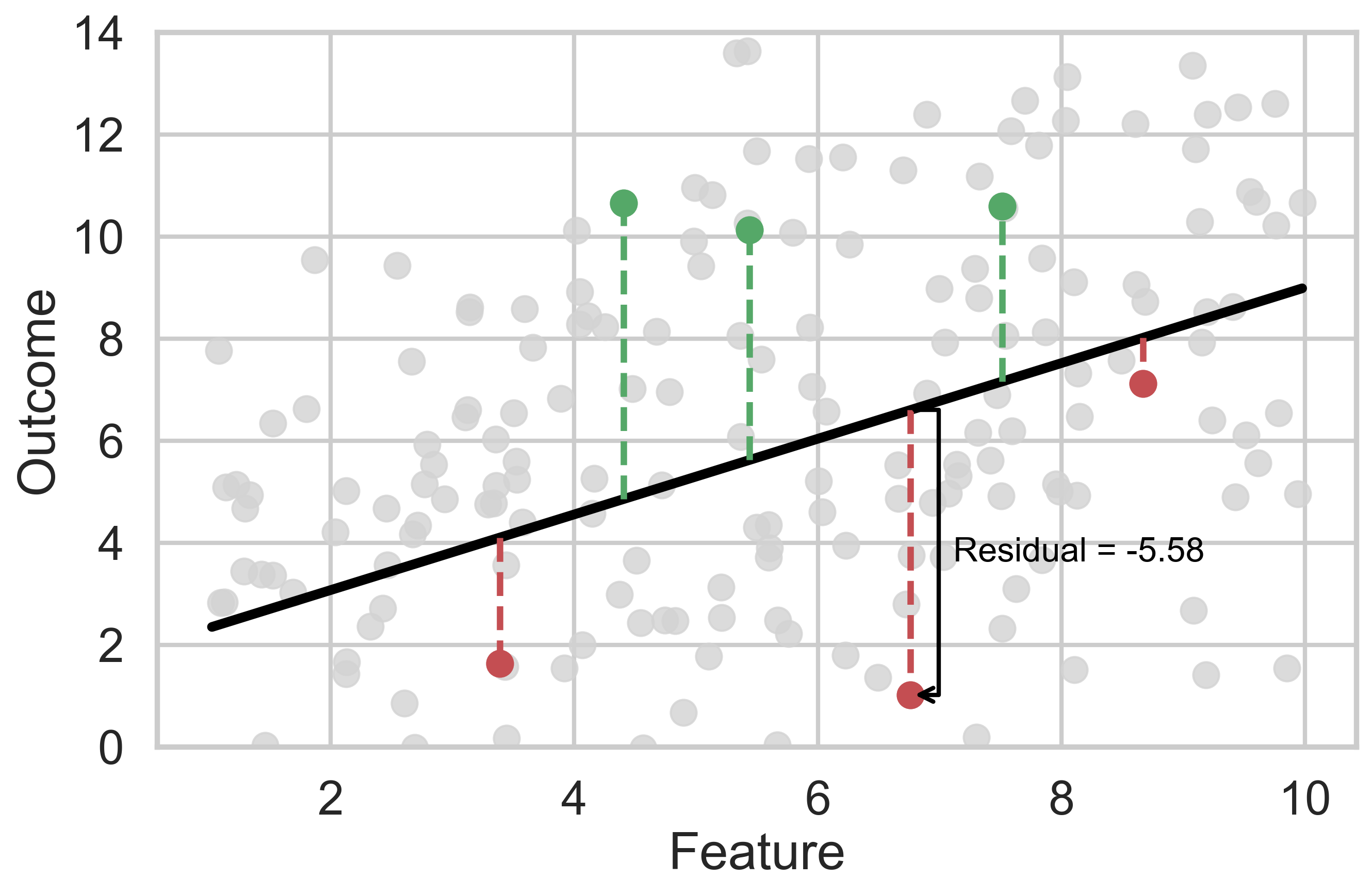
Fit Examples
What can data tell us?
- Anything we measure is definitionally historical
- Accounting information especially so!
- The past and the future are often similar, so historical data is often very useful for future decisions
- But not always
- In fact, changing the future is often a core pursuit
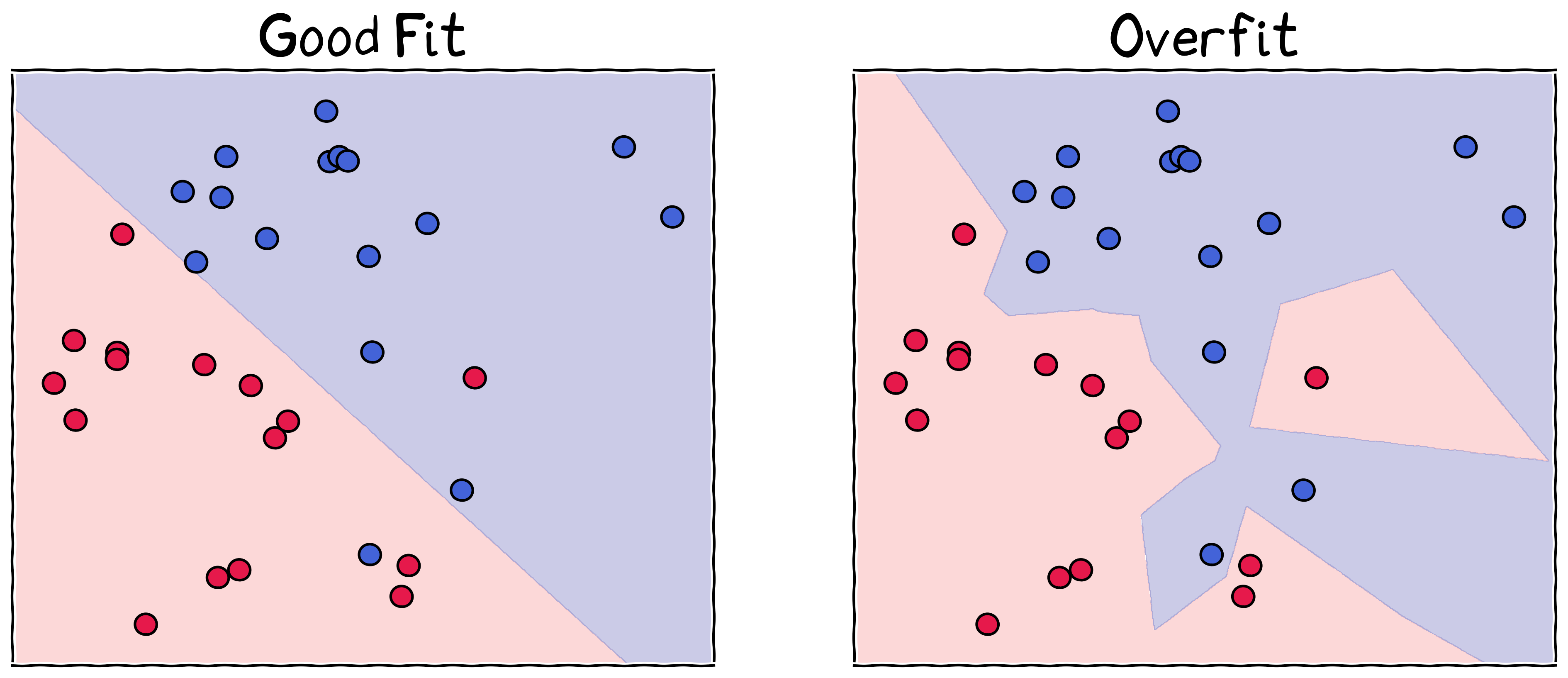
Overfitting: too much of a good thing
- Some models can just memorize the training data
- Does not mean they have learnt the “truth”
Identifying and solving Overfitting
- Split data into training data and testing data
- Training: fit best model, with potential overfitting
- Test: model hasn’t seen test data, so higher test error than training suggests overfitting
- Solutions:
- More data (synthetic data?)
- Change training
- Adjust model (with cross validation)
Identifying and solving Overfitting
Garbage in, Garbage out
- Random errors (called noise) results in worse measures and outcomes, but randomly
- E.g. predicting default risk inaccurately
- Errors all in the same direction (called bias) can result in consistently wrong results
- E.g. always underestimating default risk
- Minimize noise, beware bias
Correlation is not Causation
- Important to differentiate when making decisions
- Causal inference is designed to identify causation
- Has its own caveats, but better than nothing
Model interpretability
- Machine learning is great at capturing correlation
- ML models are often impossible to understand
- Understanding a model is important to understanding when it will work and when it won’t
- E.g. ChatGPT seems to be able to “think” until you come across non-existent citations
- Accountants have to justify their work
- To auditors, investors, regulators, etc.
Effect Sizes
- Statistical significance: high certainty in the model
- Economic significance: how many dollar signs?
- Remember that models don’t have business sense
- Important to translate model conclusions into economic impact on costs or revenues
Categorizing Analytical Methods
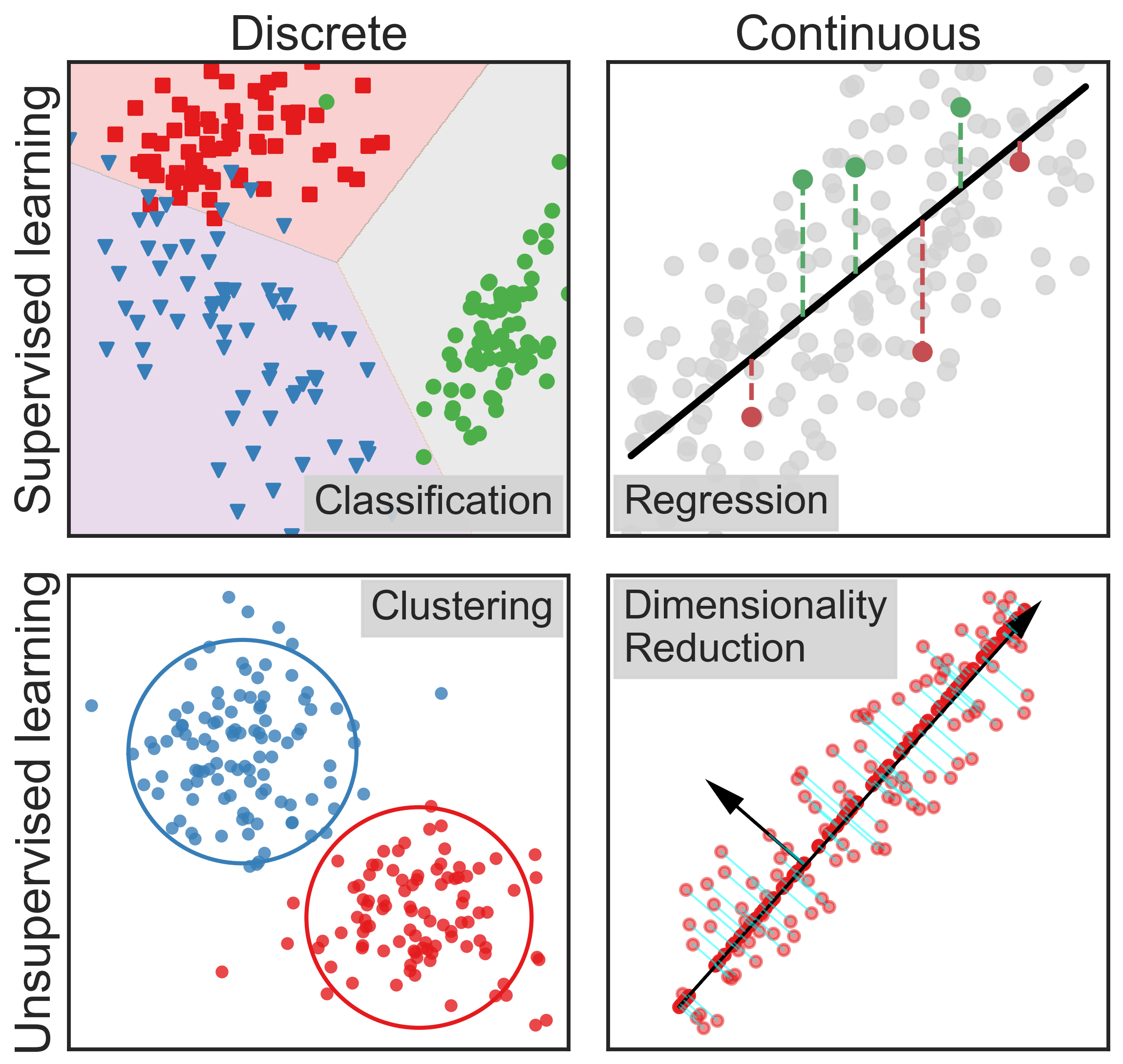
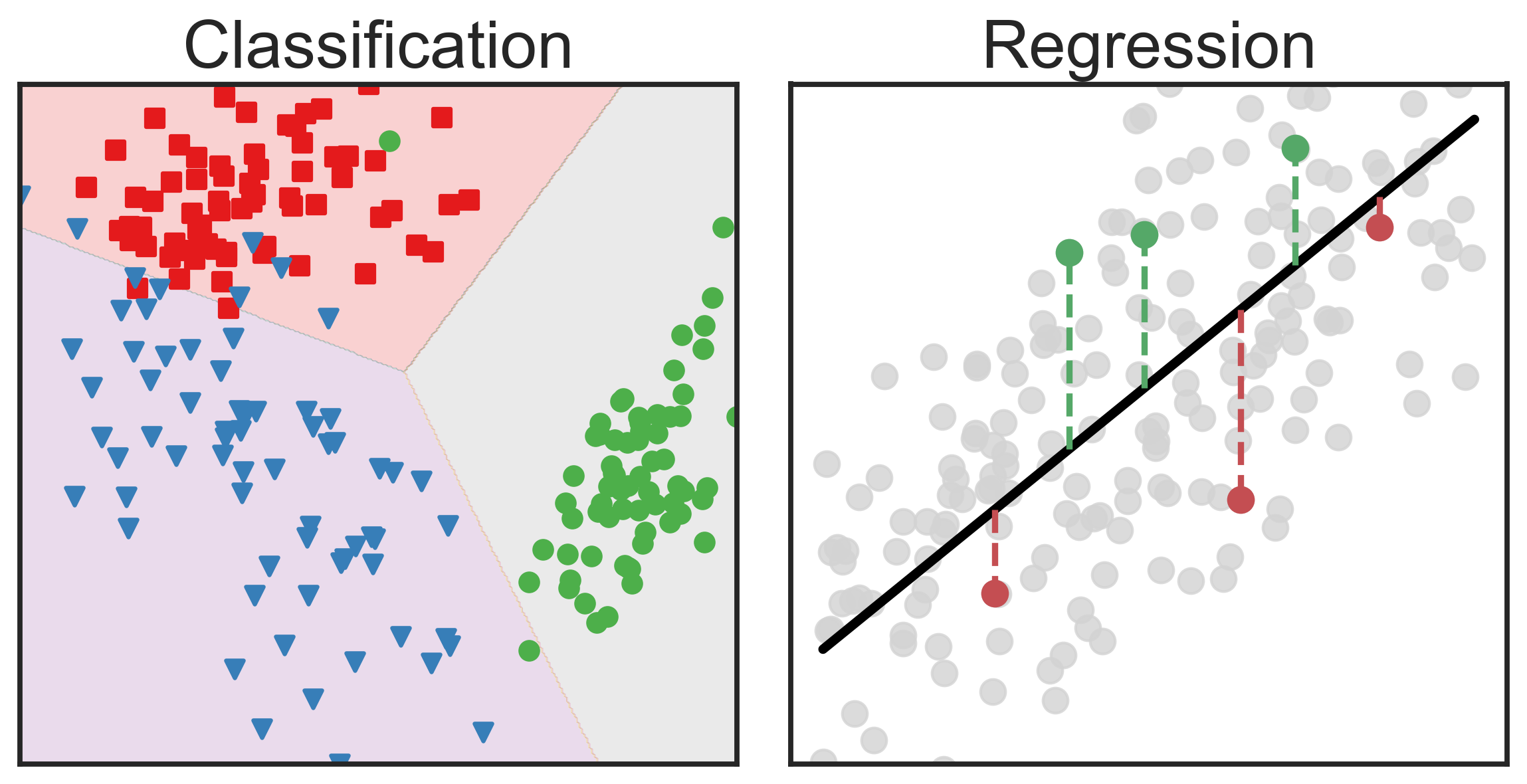
Supervised Learning
- Used when we have outcomes, or “y” variables
- Approaches model how features map to outcomes
- Example: predicting types, modeling risk
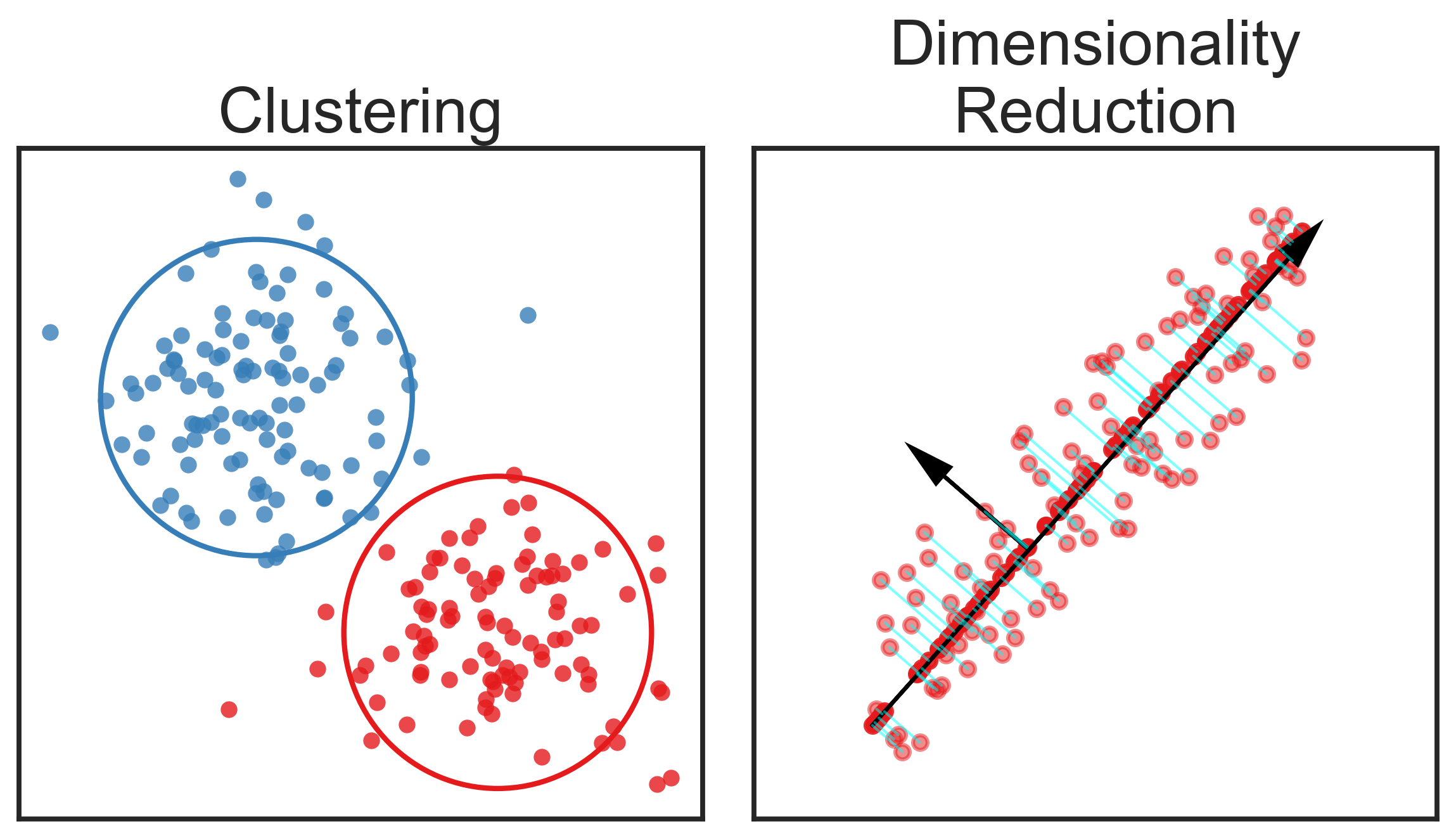
unsupervised Learning
- Used when we don’t have outcomes
- Approaches capture structures and relationships
- Example: identifying groups, computing factors
Healthy Skepticism
- Analytical models can be very powerful
- But that doesn’t obviate your professional skepticism
- Apply your domain knowledge
- Question the assumptions
- Question the model
- Question the data